sábado, 14 de marzo de 2020

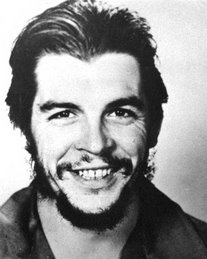
Eco-theologian philosopher Leonardo Boff Pichetto Pato Bullrich Majul Mario Markic Nelson Castro en inglés y castellano museo Che Guevara de Caballito


Please share this article with your contacts. Thanks!


Neo-fascism: a world-wide wave

                                                 Leonardo Boff
                                        Eco-Theologian-Philosopher
                                           Earthcharter Commission

Fascism  is an extreme derivative of fundamentalism, with a long tradition in almost every culture. In his 1996 controversial work, The Clash of Civilizations and the Remaking of the World Order, Samuel P. Huntington denounces the West as home to the most virulent fundamentalists. They imagine that their culture is the best in the world, that their religion is the best, the one and only true religion, that theirs is the best form of government, democracy, with the best techno-science, that has changed the face of the planet, and with its lethal weapons, it has given humans the ability to destroy humanity and much of the biosphere.
We know of Islamic and other forms of fundamentalism; also of the fundamentalism of sectors of the official Roman Catholic Church that still believe that she is the one and only and exclusive Church of Jesus Christ, outside of which there is no salvation. This erroneous vision allows for the satanizing and even the persecution of other Christian and non-Christian denominations. Thank God for the present Pope, a man of rationality and common sense that invalidates such distortions.
Those who pretend to be the exclusive carrier of truth are condemned to be  fundamentalists and to close in on themselves without dialogue with the other.   
Here we remember the words of the great Spanish poet Antonio Machado, who wrote: “The truth.  Not your truth. Come with me to search for the truth. Your truth? Keep it to yourself. "  If together we search for the truth, it will be the full truth.
Fascism was born, and is born, within the context of the breakdown of social norms, social disorder and generalized crisis. Security disappears and the established orders are weakened. Society and individuals have difficulty living in such a situation. Social scientists and historians, such as Eric Vögelin (Order and History, 1956), L. Götz, (Entstehung der Ordnung, 1954), Peter Berger,(A Rumor of Angels: Modern Society and the Rediscovery of the Supernatural, 1973), have shown that humans possess a natural tendency towards order. Wherever they arrive, they soon create an order and their habitat.  When order disappears, violence is commonly used to impose a kind of order which does not lead to the social cohesion of coexistence.
Fascism's niche finds its origin in this disorder. Thus, at the end of the First World War, social chaos ensued, especially in Germany and Italy. The way out was to establish an authoritarian system of domination that monopolized political representation, through a single, hierarchically organized political party of the masses, forcing everything; politics, economy and culture in a single direction. This was only possible through a chief (Fürher in Germany and the Duce, in Italy) who organized an authoritarian corporate State of terror.
National myths were created for symbolic legitimacy, the heroes of the past and old traditions, usually in a framework of great political liturgies inculcating the idea of a national regeneration. Especially in Germany, Hitler's followers were filled with the conviction that the white German race was "superior" to the others, and had the right to subjugate and even to exterminate inferior races.
The word fascism was used for the first time by Benito Mussolini in 1915 when the group “Fasci d'Azione Revolucionaria” was created. Fascism derives from the term "fasci," a bundle of leafless branches, strongly fastened, with an ax on one side. A single branch can be broken, breaking a bundle is much more difficult. In 1922-23, Mussolini founded the National Fascist Party (Partido Nacional Fascista) that lasted until his overthrow in 1945. In Germany, it was established in 1933 by  Adolf Hitler, who upon being appointed Chancellor created National Socialism, the Nazi party, that imposed on the country a hard discipline, total vigilance, and a state of terror.
Fascism was sold as anti-communist, anti-capitalist, as a corporation that is above class, and creates a socially closed unity. Vigilance, direct violence, terror and the extermination of the opposition are characteristics of the historic fascism of Mussolini and Hitler.  Violence is also present in neo-fascism. 
Fascism has never totally disappeared, because there always are groups that, moved by a fundamentalist archetype, seek order at any price. This is what the present neo-fascism is about. There is in Brazil today a figure more hilarious than ideological, that proposes fascism, in whose name violence is justified, and which defends torture and torturers, homophobia and other social deviations. It is always in the name of an order to be forged, using violence against the current disorder.
Fascism has always been criminal. It created the shoa (the Holocaust, which eliminated millions of Jews). It used violence as a way of relating to society, which is why it never could and never will be consolidated for long periods of time. It is the greatest perversion of human sociability. It will not be different in Brazil, where this perversion has no possibility of success.

                                                                                                             
                                                                                                                                   Leonardo Boff
                                                                                                                            08-12-2018
    
                                                                                                            
Free translation from the Spanish sent by
Melina Alfaro, alfaro_melina@yahoo.com.ar.
Done at REFUGIO DEL RIO GRANDE, Texas, EE.UU.

You have received this message because you are in REFUGIO DEL RIO GRANDE's list.  If you do not want to continue on our list, please let us know sending a message asking to delete your subscription. Thanks.

===============================

Por favor comparta este artículo con sus contactos. ¡Gracias!

El neo-fascismo, ola mundial
Leonardo Boff
El fascismo es una derivación extrema del fundamentalismo que tiene una larga tradición en casi todas las culturas. S. Huntington en su discutida obra Choque de civilizaciones denuncia a Occidente como uno de los más virulentos fundamentalistas. Imagina que su cultura es la mejor del mundo, que tiene la mejor religión, la única verdadera, la mejor forma de gobierno, la democracia, la mejor tecnociencia, que ha cambiado la faz del planeta y que le ha conferido la capacidad de destruir a todos los seres humanos y parte de la biosfera con sus armas letales.
Conocemos el fundamentalismo islámico y otros, también el de grupos de la Iglesia Católica oficial que aún creen que ella es la única y exclusiva Iglesia de Cristo, fuera de la cual no hay salvación. Tal visión errónea abre espacio a la satanización e incluso a la persecución de otras denominaciones cristianas y no cristianas. Gracias a Dios tenemos el Papa actual de la razonabilidad y del sentido común que invalida tales distorsiones.
Todo aquel que pretende ser portador exclusivo de la verdad está condenado a ser fundamentalista y a cerrarse sobre sí mismo, sin diálogo con el otro.
Aquí se pueden recordar las palabras del gran poeta español Antonio Machado: “La verdad. No tu verdad. Y ven conmigo a buscarla. La tuya, guárdatela”. Si la buscamos juntos, ella será plena.
El fascismo nació y nace dentro de un determinado contexto de anomia, desorden social y crisis generalizada. Desaparecen las seguridades y las órdenes establecidas se debilitan. La sociedad y los individuos tienen dificultades para vivir en tal situación. Los científicos sociales y los historiadores como Eric Vögelin (Orden e Historia, 1956, L. Götz, Entstehung der Ordnung 1954, Peter Berger, Rumor de Ángeles: la sociedad moderna y el redescubrimiento de lo sobrenatural, 1973), mostraron que los seres humanos poseen una tendencia natural hacia el orden. Allí donde llegan crean pronto un orden y su hábitat. Cuando desaparece se usa comúnmente la violencia para imponer cierto orden sin el cual no se forma la cohesión social de la convivencia.
El nicho del fascismo encuentra su nacimiento en este desorden. Así al finalizar la Primera Guerra Mundial se generó un caos social, especialmente en Alemania e Italia. La salida fue la instauración de un sistema autoritario, de dominación, que monopolizó la representación política, mediante un único partido de masas, jerárquicamente organizado, enmarcando todas las instancias, la política, la economía y la cultura en una única dirección. Esto sólo fue posible mediante un jefe (Fürher en Alemania y el Duce, en Italia) que organizaron un Estado corporativista autoritario y de terror.
Como legitimación simbólica se cultivaban los mitos nacionales, los héroes del pasado y antiguas tradiciones, generalmente en un marco de grandes liturgias políticas inculcando la idea de una regeneración nacional. Especialmente en Alemania los seguidores de Hitler se llenaron de la convicción de que la raza alemana blanca era “superior” a las demás con el derecho de someter e incluso de eliminar a las inferiores.
La palabra fascismo fue usada por primera vez por Benito Mussolini en 1915 al crear el grupo “Fasci d'Azione Revolucionaria”. Fascismo se deriva de un haz (fasci) de varas, fuertemente amarradas, con un hacha al lado. Una vara puede ser quebrada, un haz, difícilmente. En 1922/23 fundó el Partido Nacional Fascista que perduró hasta su derrocamiento en 1945. En Alemania se estableció en 1933 con Adolfo Hitler que al ser nombrado canciller creó el Nacionalsocialismo, el partido nazi que impuso al país una dura disciplina, vigilancia total y el terror de estado.
El fascismo se presentó como anti-comunista, anticapitalista, como una corporación que supera las clases y crea una totalidad social cerrada. La vigilancia, la violencia directa, el terror y el exterminio de los opositores son características del fascismo histórico de Mussolini y de Hitler, y en el neo-fascismo la violencia también está presente. 
El fascismo no ha desaparecido totalmente nunca, pues siempre hay grupos que, movidos por un arquetipo fundamental, buscan el orden de cualquier forma. Es el neofascismo actual. Hoy en Brasil hay una figura más hilarante que ideológica que propone el fascismo en nombre del cual justifica la violencia, la defensa de la tortura y de torturadores, de la homofobia y otras desviaciones sociales. Siempre en nombre de un orden a ser forjado contra el actual desorden vigente usando violencia.
El fascismo siempre ha sido criminal. Creó la shoa (eliminación de millones de judíos). Usó la violencia como forma de relacionarse con la sociedad, por lo que nunca pudo ni podrá consolidarse por largo tiempo. Es la perversión mayor de la sociabilidad humana. En Brasil no será diferente. Aquí no tendrá posibilidades de imponerse.

Leonardo Boff solidarity ethics of justice en castellano e inglés demise museo Che Guevara de Caballito Eladio González toto Chaubloqueo l


Please share this article with your contacts. Thanks!


The current demise of ethics
                                                  Leonardo Boff
                                        Eco-Theologian-Philosopher
                                           Earthcharter Commission

Between July 10 and 13, 2018, an international congress organized by the Society of Theology and Sciences of Religion, (Sociedad de Teología y Ciencias de la Religión, SOTER) on the subjects, Religion, Ethics and Politics was celebrated in Belo Horizonte, Brazil,. The expositions were very timely, and of superior quality.  I will only deal with the debate on the Demise of Ethics, that I introduced.
In my understanding two factors have touched the heart of ethics: the process of globalization and the commercialiization of society.
Globalization has revealed the different types of ethics, based on cultural differences. Western ethics, one of many, has been relativized. The great Oriental cultures and the cultures of the original Nations have shown that we can be ethical in very different forms.
For example, the Maya culture centers everything in the heart, because everything was born from the love of the two great hearts: those of the Heavens and of the Earth. The ethical ideal is to create in all persons hearts that are sensible, just, transparent and true:  the ethics of “good living and coexisting" of the nations of the Andes, centered in the equilibrium of all things, among human beings, with Nature and with the Universe. 
A consequence of this variety of ethical paths has been generalized relativity. We know that law and order, values of basic practical ethics, are prerequisites for any  civilization anywhere in the world. The ethical disaster that we now foresee is because humanity is yielding ground to barbarity, towards a true worldwide age of darkness.
Shortly before his death in 2017, thinker Sigmund Bauman warned: “either humanity joins hands to save all of us together; or together we will swell the funeral procession of those who walk towards the abyss”. What kind of ethics could guide us as humanity living in the same Common Home? The second great obstacle to ethics is the commercialization of society, that already in 1944, Karl Polanyi called “The Great Transformation”. That is the phenomenon of transitioning from a market economy to a society of pure commerce. Everything is transformed into merchandise, which Karl Marx already foresaw in his 1848 text The Poverty of Philosophy, where he noted that the most sacred things, such as truth and consciousness, would be commercialized; and this would be the “time of great corruption and universal venality”. We are now living in that time. The economy, especially the speculative sector, dictates the path of politics and of society as a whole. Competition is its trademark and solidarity has practically disappeared. 
Which is the ideal ethics of this type of society? The capacity for unlimited accumulation and limitless consumption, that creates a great gap between a very small group that controls most of the world economy and the great majorities, who are excluded and drowning in hunger and misery.  Here are revealed traits of barbarity and cruelty as rarely have been seen in history.
We must go back to create an ethics rooted in that which is specifically ours as human beings and which, for that reason, is universal and can be adopted by all.
I believe that in the very first place, is the ethics of caring.  According to the fable 220 of the slave Higinio, well interpreted by Martin Heidegger in Being and Time, it consists of the ontological substratum of the human being, that group of factors without which the human being and other living beings never could have arisen. Because caring pertains to the human essence, we all can live and give in concrete ways, according to our cultures. Caring presupposes a friendly and loving relationship with reality, an extended hand for solidarity and not a clenched fist for domination. Life is at the center of caring. The civilization must be bio-centered. 
Another part of our human essence is solidarity and the ethics that derives from solidarity. We now know from bio-anthropology that it was solidarity among our anthropoid ancestors that allowed them to hone their animal state into humanity. They searched for food and consumed it together, in solidarity.  We all live because there existed, and still exists, a minimum of solidarity, starting with the family.  What was foundational yesterday, continues to be so today.. 
Another aspect closely tied to our humanity is the ethics of universal responsibility.  Either we together undertake responsibility for the destiny of our Common Home, or together we will walk a path of no return. We are responsible for the sustainability of Gaia and the ability of her ecosystems to flourish within the whole community of life.
Philosopher Hans Jonas, who first elaborated “The Principle of Responsibility”, added the importance of collective fear. When collective fear arises and humans start to realize that they may come to a tragic end and even disappear as a species, a primordial fear erupts that puts them into survival mode ethics. The unconscious presupposition is that the value of life is greater than any other value: cultural, religious or economic. 
Finally, it is important to resurrect the ethics of justice for all. Justice is the minimum right that we must guarantee the other to be able to continue coexisting and receiving what we as people deserve. In particular, the institutions must be just and equitable, to avoid class privilege and the social exclusions that produce so many victims, particularly in our country, which is one of the most unequal and most unjust in the world. This explains the hatred and discrimination that tear society apart. They come not from the people but from the moneyed elites that have always lived a privileged life, and who do not allow the poor to move even one rung up on the social ladder. We presently live under an exceptional regime in, where the Constitution and the laws of the country are trampled by the Lawfare (the distorted interpretation of the law  practiced by a judge, so as to hurt the accused).
Justice has value not only among humans but also with nature and the Earth, which are.the carriers of rights and for that reason they must be included in our concept of socio-ecological democracy. 
These are some minimum parameters for an ethics to be valid for each individual, and for all of humanity, gathered  in our Common Home. We must incorporate an ethics of a shared sobriety to accomplish what Xi Jinping, supreme leader of China, used to call “a moderately supplied society”. This is a minimum and reachable ideal.  Otherwise, we may experience a socio-ecological Armagedon.

                                                                                                           
                                                                                                                       Leonardo Boff
                                                                                                                            07-16-2018
                                                                                                               
Free translation from the Spanish sent by
Melina Alfaro, alfaro_melina@yahoo.com.ar.
Done at REFUGIO DEL RIO GRANDE, Texas, EE.UU.

You have received this message because you are in REFUGIO DEL RIO GRANDE's list.  If you do not want to continue on our list, please let us know sending a message asking to delete your subscription. Thanks.

===============================

Por favor comparta este artículo con sus contactos. ¡Gracias!

El eclipse de la ética en la actualidad
Leonardo Boff
Entre el 10 y el 13 de julio de 2018 se celebró en Belo Horizonte un congreso internacional organizado por la Sociedad de Teología y Ciencias de la Religión (SOTER) en torno a los temas Religión, Ética y Política. Las exposiciones fueron de gran actualidad y de nivel superior. Voy referirme solamente a la discusión sobre el Eclipse de la Ética que me tocó introducir.
A mi modo de ver dos factores han alcanzado el corazón de la ética: el proceso de globalización y la mercantilización de la sociedad.
La globalización ha mostrado los diferentes tipos de ética, según las diferencias culturales. Se ha relativizado la ética occidental, una entre tantas. Las grandes culturas de Oriente y las de los pueblos originarios han revelado que podemos ser éticos de forma muy diferente.
Por ejemplo, la cultura maya centra todo en el corazón, ya que todas las cosas nacieron del amor de los dos grandes corazones del Cielo y de la Tierra. El ideal ético es crear en todas las personas corazones sensibles, justos, transparentes y verdaderos. O la ética del “bien vivir y convivir” de los andinos, asentada en el equilibrio de todas las cosas, entre los humanos, con la naturaleza y con el universo. 
Tal pluralidad de caminos éticos ha tenido como consecuencia una relativización generalizada. Sabemos que la ley y el orden, valores de la práctica ética fundamental, son los prerrequisitos para cualquier civilización en cualquier parte del mundo. Lo que observamos es que la humanidad está cediendo ante la barbarie rumbo a una verdadera era mundial de las tinieblas, tal es el descalabro ético que estamos viendo.
Poco antes de morir en 2017 advertía el pensador Sigmund Bauman: “o la humanidad se da las manos para salvarnos juntos o si no, engrosaremos el cortejo de los que caminan rumbo al abismo”. ¿Cuál es la ética que nos podrá orientar como humanidad viviendo en la misma Casa Común? El segundo gran impedimento a la ética es la mercantilización de la sociedad, lo que Karl Polanyi llamaba ya en 1944 “La Gran Transformación”. Es el fenómeno del paso de una economía de mercado a una sociedad puramente de mercado. Todo se transforma en mercancía, cosa ya prevista por Karl Marx en su texto La miseria de la Filosofía de 1848, cuando se refería al tiempo en el que las cosas más sagradas como la verdad y la conciencia serían llevadas al mercado; sería el “tiempo de la gran corrupción y de la venalidad universal”. Pues estamos viviendo ese tiempo. La economía especialmente la especulativa dicta los rumbos de la política y de la sociedad como un todo. La competición es su marca registrada y la solidaridad prácticamente ha desaparecido. 
¿Cuál es el ideal ético de este tipo de sociedad? La capacidad de acumulación ilimitada y de consumo sin límites, que genera una gran división entre un pequeñísimo grupo que controla gran parte de la economía mundial y las mayorías excluidas y hundidas en el hambre y la miseria. Aquí se revelan rasgos de barbarie y de crueldad como pocas veces en la historia.
Tenemos que volver a fundar una ética que se enraíce en aquello que es específico nuestro como humanos y que, por eso, sea universal y pueda ser asumida por todos.
Estimo que en primerísimo lugar está la ética del cuidado, que según la fábula 220 del esclavo Higinio, bien interpretada por Martin Heidegger en Ser y Tiempo, constituye el sustrato ontológico del ser humano, aquel conjunto de factores sin los cuales jamás surgirían el ser humano y otros seres vivos. Por pertenecer el cuidado a la esencia de lo humano, todos pueden vivirlo y darle formas concretas, conforme a sus culturas. El cuidado presupone una relación amigable y amorosa con la realidad, de mano extendida para la solidaridad y no de puño cerrado para la dominación. En el centro del cuidado está la vida. La civilización deberá ser biocentrada. 
Otro dato de nuestra esencia humana es la solidaridad y la ética que de ella se deriva.Sabemos hoy por la bioantropología que fue la solidaridad de nuestros ancestros antropoides la que permitió dar el salto de la animalidad a la humanidad. Buscaban los alimentos y los consumían solidariamente. Todos vivimos porque existió y existe un mínimo de solidaridad, comenzando por la familia. Lo que fue fundacional ayer, lo sigue siendo todavía hoy. 
Otro camino ético ligado a nuestra estricta humanidad es la ética de la responsabilidad universal, O asumimos juntos responsablemente el destino de nuestra Casa Común o vamos a recorrer un camino sin retorno. Somos responsables de la sostenibilidad de Gaia y de sus ecosistemas para que podamos seguir viviendo junto con toda la comunidad de vida.
El filósofo Hans Jonas que fue el primero en elaborar “El Principio de Responsabilidad”, le agregó la importancia del miedo colectivo. Cuando este surge y los humanos empiezan a darse cuenta de que pueden conocer un fin trágico e incluso llegar a desaparecer como especie, irrumpe un miedo ancestral que los lleva a una ética de supervivencia. El presupuesto inconsciente es que el valor de la vida está por encima de cualquier otro valor cultural, religioso o económico. 
Por último, es importante rescatar la ética de la justicia para todos. La justicia es el derecho mínimo que tributamos al otro de que pueda continuar existiendo y recibiendo lo que le toca como persona. Las instituciones especialmente deben ser justas y equitativas para evitar los privilegios y las exclusiones sociales que tantas víctimas producen, particularmente en nuestro país, uno de los más desiguales, es decir, más injustos del mundo. De ahí se explica el odio y las discriminaciones que desgarran a la sociedad, venidos no del pueblo sino de las élites adineradas, que siempre viven del privilegio y no aceptan que los pobres puedan subir un peldaño en la escala social. Actualmente vivimos bajo un régimen de excepción en el que tanto la Constitución como las leyes son pisoteadas mediante el Lawfare (la interpretación distorsionada de la ley que el juez practica para perjudicar al acusado).
La justicia no vale solo entre los humanos sino también con la naturaleza y con la Tierra, que son portadoras de derechos y por eso deben ser incluidas en nuestro concepto de democracia socio-ecológica. 
Estos son algunos parámetros mínimos para una ética válida para cada pueblo y para la humanidad, reunida en la Casa Común. Debemos incorporar una ética de la sobriedad compartida para lograr lo que decía Xi Jinping, jefe supremo de China: “una sociedad moderadamente abastecida”. Esto significa un ideal mínimo y alcanzable. En caso contrario podremos conocer un armagedón social y ecológico.

                                                                                                             
16-07-2018

Texas message from Leonardo Boff que no es PichettoFeminist theologies give back Guantanamo to Cuba Ernesto Che Guevara´s museum in Argentina Buenos Aires Toto


Please share this article with your contacts. Thanks!


III Continental Congress of Latin American and Caribbean Theology: 

“we are challenged by the cry of the poor and of the Earth”
From August 30 to September 2 in El Salvador, land of martyrs, especially of Don Oscar Arnulfo Romero, the III Continental Latinamerican and Caribbean Encounter of Theology was celebrated, on the occasion of 50th anniversary of the gathering of the Latin American and Caribbean bishops, that ensured a great change of the Roman Catholic Church towards the poor and their liberation. It was the baptism of the Church into this new phase of history. More than 600 persons from all over the Continent and the exterior attended, which shows the general interest in that event and its consequences. We offer here part of the final document that offers a very good summary of the event, which was promoted by the Red Amerindia of the Central American University of San Salvador: L. Boff.

Message to the Caribbean and Latin American Peoples
1. Young men and women theologians, and some brothers and sisters from Evangelical and Pentecostal Churches, were present.
2. In those days we had relearned how to understand our faith, and to live it, starting from the principles taught us by Monsignor Oscar Romero, the murdered priest Ignacio Ellacuria, the martyred Sister Ita Ford, the tortured people's lawyer Marianela Garcia-Villas, and many other brothers and sisters who became our teachers in following Jesus of Nazareth. Those men and women martyrs show us that we must live the faith, paying attention and giving importance to the socio-political and cultural reality, seen through the eyes of the impoverished.
3. In Medellin, the Church inserted herself into the processes of socio-political transformation occurring around the continent. We will not rest as long as we cannot have an economy at the service of the common good and of the caring of the Earth, the Water and all of Nature, to which we all belong, as her sons and daughters. 
4. Around the whole continent, what in Medellin was called “institutionalized violence” continues to challenge us. The dominant society still today neither respects nor values either the indigenous communities of different ethnic nations, or their ancestral cultures. 
5. We join in the struggles of the women who, in every country, are victims of diverse types of violence. We recognize the contribution of the Black theologies during these 50 years, the contributions of the Original Nations and, in particular, the proposal made by the Feminist Theology, in contemplating a Church founded in fact as a discipleship of equals. We assumed the plight of the victims of sexual abuse committed against children, teenagers, against women and against our brothers and sisters of the LGBT communities. It is urgent that we change the patriarchal and clerical structure of our Churches. 
6. We know about the massacres of young people, especially the poor and, in some countries, the mostly Black victims of the worsening conditions of life and urban violence. Some of our young theologians are joining these struggles in creative forms. 
7. The conquests of new social and political processes belong to the people and deserve to be defended, starting from the bases. 
8. We denounced the responsibility of the Northamerican empire in continuing its policy of destabilizing governments that do not bend to its colonialist imperial demands.
9. We will continue struggling against the xenophobic, racist and inhumane policies of the President of the United States, practiced against migrants, especially our poor brothers and sisters who attempt to cross the border between the United States and Mexico. 
10. The Medellin Conference proposed a prophetic Church at the service of the liberation of our peoples, starting from the preferential option for the poor. We want to commit ourselves today to the project of a more synodical and courageous Church, in permanent dialogue with humanity, especially with the social movements organized to change the world. 
11. We recognize as a sign of the Spirit the proposal of “Good Living”, that we received from the original Nations of our Continent. We understand that “good living” is a path of a society of communion that prefers the common good over the individual, and takes seriously the rights of our sister, Mother Earth, and of Life. 
The Zapatistas of Southern Mexico taught us: We are an army of dreamers. For that reason, we are invincible. As Saint Oscar Romero de las Americas said: “let's continue doing what we can do, because what is important is that we do”. In that firm and unbreakable hope, the force of the Spirit that is expressed in the strength of the poor, illuminates and guides all of us though the paths of the Kingdom.
Note: Everyone present signed a text in support to Pope Francis who is lately enduring opposition and resistance from conservative groups that do not want change to the ways the Christian faith is lived in these present, troubled, days.

Free translation from the Spanish sent by

Leonardo Boff, lboff@leonardoboff.eco.br.

Done at REFUGIO DEL RIO GRANDE, Texas, EE.UU.

You have received this message because you are in REFUGIO DEL RIO GRANDE's list.  If you do not want to continue on our list, please let us know sending a message asking to delete your subscription. Thanks.
 
****************************************************************
Por favor comparta este artículo con sus contactos. ¡Gracias!
III Congreso Continental de Teología Latinoamericana y Caribeña: 
“el clamor de los pobres y de la Tierra nos interpelan”
Del 30 de agosto al 2 de septiembre se celebró en El Salvador, tierra de mártires, especialmente de Don Arnulfo Romero, el III Encuentro Continental de Teología Latinoamericana y caribeña con ocasión de los 50 años de Medellín (1968), reunión de los obispos latinoamericanos y caribeños que sellaron el gran viraje de la Iglesia en dirección a los pobres y a su liberación. Fue el bautismo de la Iglesia en esta nueva fase de la historia. Acudieron más de 600 personas de todo el Continente y del extranjero, lo que demuestra el interés general por ese evento y sus consecuencias posteriores. Damos aquí parte del documento final que nos ofrece un bello resumen del evento promovido por la Red Amerindia en la Universidad UCA de San Salvador: LBoff.

Mensaje a los pueblos de América Latina y del Caribe
1. Estuvieron presentes jóvenes teólogos y teólogas, así como algunos hermanos y hermanas de Iglesias evangélicas y pentecostales.
2. En estos días hemos reaprendido a leer nuestra fe ya vivirla a partir de los principios que nos enseñaron Mons. Oscar Romero, el sacerdote asesinado Ellacuría y tantos otros hermanos y hermanas que se hicieron nuestros maestros y maestras en el seguimiento de Jesús. Ellos y ellas nos revelan que tenemos que vivir la fe dando atención e importancia a la realidad social, política y cultural, vista a partir de la causa de los empobrecidos.
3. En Medellín, la Iglesia se insertó en los procesos de transformación social y política vigentes en el continente. No descansaremos mientras no podamos vivir una economía al servicio del bien común y del cuidado hacia la Tierra, el Agua y toda la naturaleza a la que pertenecemos como hijos e hijas. 
4. En todo el continente nos continúa interpelando lo que en Medellín se llamó “violencia institucionalizada”. Hasta hoy, la sociedad dominante no respeta ni valora a las comunidades indígenas de diversas etnias ni sus culturas ancestrales. 
5. Nos unimos a las luchas de las mujeres que, en todos los países, son víctimas de distintos tipos de violencia. En estos 50 años reconocemos la contribución de las teologías negras, las de los pueblos originarios y, de manera especial, la propuesta hecha por la teología feminista de pensar una Iglesia fundamentada de hecho en el discipulado de iguales. Asumimos la causa de las víctimas de abusos sexuales cometidos contra niños, adolescentes, contra mujeres y contra hermanos y hermanas LGBT. Es urgente cambiar la estructura patriarcal y clerical de nuestras Iglesias. 
6. Sabemos de las masacres de jóvenes, especialmente pobres y, en algunos países, en su mayoría negros, víctimas del deterioro de las condiciones de vida y de la violencia urbana. Algunos de nuestros teólogos y teólogas jóvenes están acompañando de forma creativa esas luchas. 
7. Las conquistas de nuevos procesos sociales y políticos pertenecen al pueblo y merecen ser defendidas a partir de las bases. 
8. Denunciamos la responsabilidad del imperio norteamericano, que prosigue con su política de desestabilización de los gobiernos que no se dobleguen a sus exigencias colonialistas.
9. Seguiremos luchando contra las políticas xenófobas, racistas e inhumanas del presidente de Estados Unidos contra los migrantes, especialmente nuestros hermanos y hermanas pobres que intentan pasar la frontera norteamericana. 
10. La conferencia de Medellín propuso una Iglesia profética al servicio de la liberación de nuestros pueblos a partir de la opción por los pobres. Hoy queremos comprometernos con el proyecto de una Iglesia más sinodal y valiente, en permanente diálogo con la humanidad y especialmente con los movimientos sociales, organizados para cambiar el mundo. 
11. Reconocemos como señal del Espíritu la propuesta del “Bien Vivir”, que recibimos de los pueblos originarios del continente. Comprendemos que el “bien vivir” es camino de una sociedad de comunión que privilegia el bien común sobre lo particular y toma en serio los derechos de la hermana Madre Tierra y de la Vida. 
Los zapatistas del sur de México nos enseñaron: Somos un ejército de soñadores/as. Por eso, somos invencibles. Como dijo San Oscar Romero “sigamos haciendo lo que podamos hacer, pero lo importante es hacer”. En esa esperanza firme e inquebrantable, la fuerza del Espíritu que se expresa en la fuerza de los pobres nos ilumine y nos guíe a todos/as por los caminos del Reino.
Nota: Todos los presentes suscribieron un texto de apoyo al Papa Francisco ante las oposiciones y resistencias que viene sufriendo últimamente por parte de los grupos conservadores que no quieren cambios en el estilo de vivir la fe cristiana en los conturbados días actuales.


Este mensaje le llega porque Usted está en la lista de REFUGIO DEL RIO GRANDE. Si no quiere seguir recibiéndolo, por favor envienos un mensaje con su nombre pidiendo borremos su subscripción.  Gracias.